
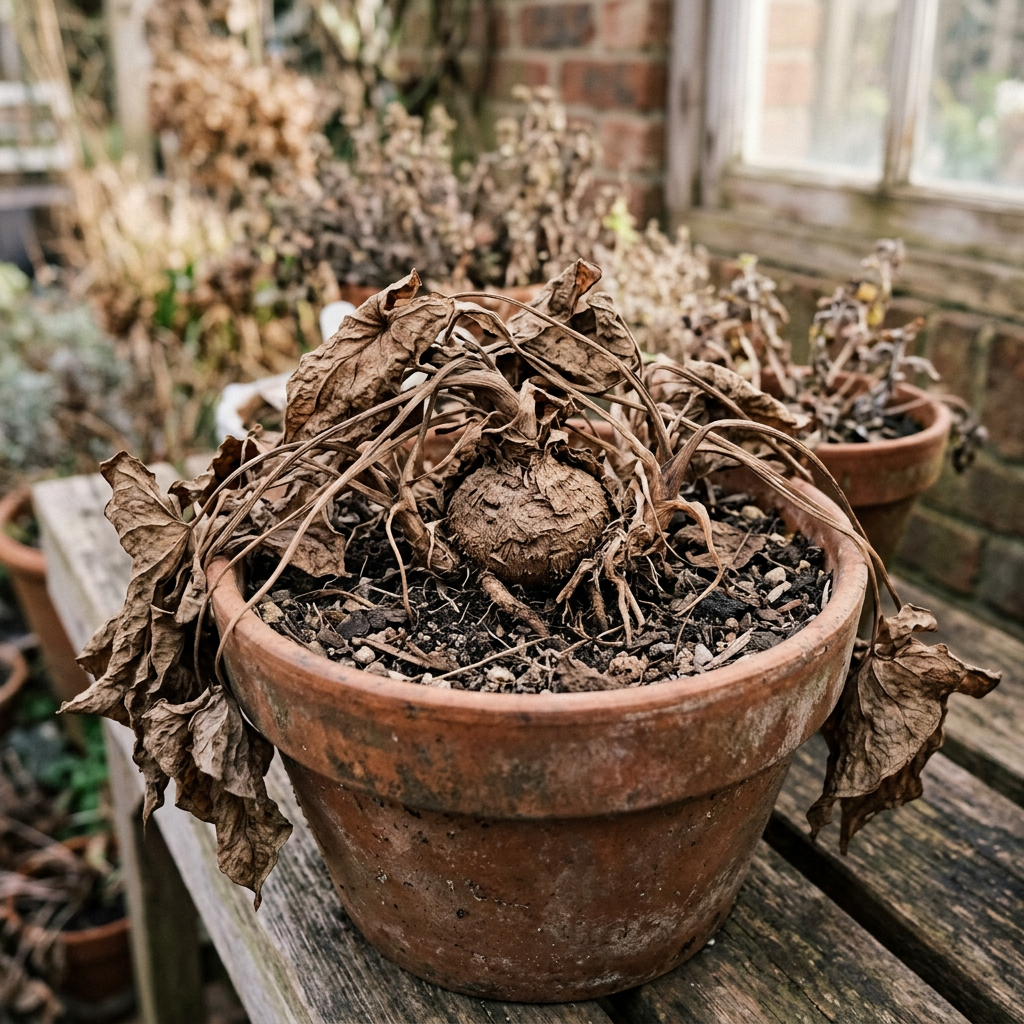
If you’ve ever walked past your caladium one morning and felt your stomach drop — leaves drooping, edges curling, color fading to a sickly yellow — you’re not alone. It’s one of the most common moments of panic for caladium owners, especially those who are new to growing them. The instinct is to assume the worst: did I overwater it? Underwater it? Did I do something wrong?
Take a breath. In most cases, what you’re seeing isn’t a dying plant. It’s a caladium doing exactly what caladiums are supposed to do.
What Is Caladium Dormancy?
Caladiums are tuberous plants — meaning their energy is stored underground in a tuber, much like a bulb. In their natural tropical habitat, caladiums grow actively during warm, humid months and then enter a rest period when temperatures drop or daylight hours shorten. During this rest period, the leaves naturally yellow, wilt, and die back, sometimes until there’s nothing left above the soil at all.
This isn’t the plant failing. It’s the plant protecting itself. The tuber beneath the soil stays alive and stores energy, waiting for warmer, brighter conditions to return — at which point it sends up fresh new leaves, often just as vibrant (sometimes even more so) than before.
For a first-time caladium owner, this can be genuinely alarming. There’s no warning label that says “this is normal,” and online searches during a panic moment often turn up a mix of conflicting advice. That uncertainty — not knowing whether to intervene, wait, or give up — is the real source of stress here, more than the plant itself.
How to Tell Dormancy Apart from a Real Problem
Not every wilting leaf means dormancy, so here’s how to read the signs:
Likely dormancy if:
- The decline is gradual, affecting multiple leaves over days or weeks
- It’s happening during cooler months or a period of shorter daylight
- The soil and growing conditions haven’t changed
- The plant has been healthy up until this point
Likely a different issue if:
- Only one or two leaves are affected while others stay healthy
- You notice mushy, blackened stems or a foul smell near the soil (often a sign of root rot from overwatering)
- Leaves are crisping rapidly with brown, papery patches in a warm, actively growing season (often sun scorch or underwatering)
- New growth recently emerged and is already declining (possible transplant shock rather than dormancy)
If your situation matches the “likely dormancy” list, the best thing you can do is also often the hardest: do less.
What to Do When Your Caladium Goes Dormant
- Reduce watering significantly. A dormant tuber doesn’t need much moisture, and overwatering during this period is one of the most common ways well-meaning plant owners accidentally cause rot. Let the soil dry out considerably between waterings — for many growers, this means watering only sparingly, just enough to prevent the soil from going bone dry.
- Don’t repot or disturb the tuber. It’s tempting to “check on it” by digging around, but the tuber is at its most vulnerable during dormancy. Leave it undisturbed in its pot.
- Move it somewhere stable. A spot that’s not too cold, not in direct blasting AC, and out of harsh direct sun is ideal. Consistency matters more than brightness during this phase.
- Resist the urge to “fix” it with fertilizer. A dormant plant isn’t actively growing, so feeding it won’t help — and can sometimes do more harm than good by encouraging salt buildup in the soil.
- Be patient. This is the hardest part. Dormancy can last anywhere from a few weeks to a few months, depending on conditions. There’s often no visible activity for a while — and then, almost overnight, a small green shoot appears.
When Growth Returns
As temperatures warm and daylight increases, you’ll typically notice a small spike or rolled leaf emerging from the soil — sometimes before you’d expect it. This is your cue to gradually resume normal watering and, once a few leaves have fully unfurled, begin light feeding again if you choose to fertilize.
Many growers find that the leaves which emerge after a dormancy cycle are just as striking — sometimes more so — than the previous season’s growth. The rest period isn’t a setback; it’s part of the rhythm that makes caladiums such rewarding plants to grow over time.
The Bigger Picture
If there’s one thing we hope you take away from this, it’s this: a caladium going quiet for a while is not a sign of failure. It’s one of the most natural, built-in behaviors of the plant — and once you’ve been through a dormancy cycle once, it becomes far less worrying the next time around.
If you’re newer to growing caladiums and want a fuller picture of what to expect throughout the year — from light and watering needs to choosing the right variety for your space — our caladium plant care guide covers everything in one place, so you’re never caught off guard by a normal part of the plant’s life cycle.
Whatever stage your caladium is in right now — thriving, resting, or somewhere in between — it’s likely doing exactly what it’s supposed to be doing.
Leave a Reply