
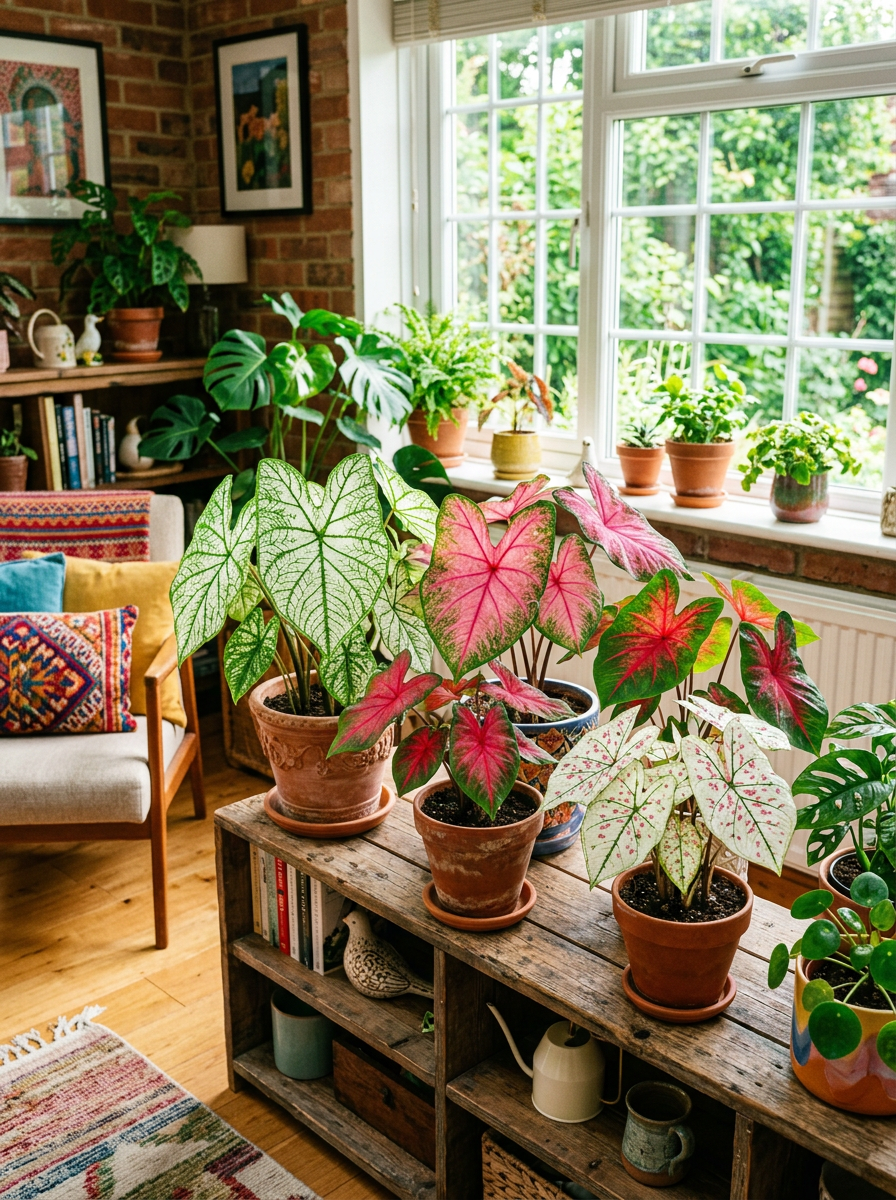
There’s a reason caladiums have a way of stopping people in their tracks. Maybe it’s the first time you spot one in a friend’s living room — those impossibly bold, paper-thin leaves in shades of pink, red, white, and green, almost too vivid to be real. Or maybe you’ve been growing plants for years, chasing that next rare variegation, and a caladium catches your eye at just the right angle, the light passing through its leaf like stained glass.
Whatever brought you here, this guide is for you. Whether you’re a first-time plant parent nervous about “killing another one,” a collector hunting for the next showstopper for your shelf, or someone looking for a living gift that feels personal and beautiful — caladiums have a place in your home. Let’s walk through everything you need to know: what makes them special, how to choose the right one, how to keep it thriving, and where to find healthy, well-grown plants you can trust.
What Makes Caladiums So Special?
Caladiums are tropical, tuberous plants best known for their dramatic, heart- or arrow-shaped leaves. Unlike plants grown for flowers, caladiums are grown almost entirely for their foliage — and what foliage it is. Depending on the variety, leaves can be deep crimson, soft pink, snowy white, or a rich green splashed and veined with contrasting colors. Some, like ruffled hybrids, have wavy, textured edges that catch the light beautifully.
What makes caladiums particularly exciting for plant lovers in the Philippines and other warm, humid climates is that they’re naturally suited to the environment. These plants originate from tropical regions of South and Central America, which means our local heat and humidity — often a challenge for other houseplants — is exactly what caladiums enjoy.
For collectors, caladiums offer something special: a huge range of cultivars and hybrids, many of them patented and produced in limited numbers, meaning there’s always something new to add to a growing collection. For beginners, many varieties are surprisingly forgiving once you understand their basic rhythm — including a natural dormancy period that often gets mistaken for a dying plant (more on that below, because this is one of the biggest sources of panic for new caladium owners).
Choosing the Right Caladium for You
One of the most common pain points we hear, especially from beginners, is simply: “There are so many — how do I choose?” Here’s a simple way to think about it.
If you’re new to plants and want something forgiving: Look for hardier hybrid varieties bred for compact growth and adaptability to different light levels. These tend to handle minor care mistakes — a missed watering, a slightly darker corner — better than older, more delicate cultivars. If you’re searching for easy care indoor plants, modern caladium hybrids are a fantastic entry point into foliage plants that still feel exciting and rewarding to grow.
If you’re a collector or enthusiast: This is where it gets fun. Caladiums are bred and patented much like roses or orchids, with growers continually developing new color combinations, leaf shapes, and growth habits. If you’re the type who loves tracking down a specific cultivar, looking for rare plants for sale or sourcing buy rare Caladium bulbs opportunities can open up an entirely new corner of your collection — often at a more accessible price point than other “rare plant” categories.
If you’re buying as a gift or for home styling: Caladiums make striking gifts because they photograph beautifully and arrive looking like a finished design piece — no growing required to “see” the appeal. A potted caladium in a neutral ceramic pot works in almost any interior style, from minimalist to maximalist, and instantly adds color without needing matching furniture or decor.
If your space doesn’t get much natural light: This is a question we get often, and the honest answer is: caladiums prefer bright, indirect light, but many varieties tolerate lower light reasonably well — they may simply produce slightly smaller leaves or hold less intense color. If you’re specifically working with a dim apartment or office, it’s worth choosing varieties known for shade tolerance rather than assuming all caladiums behave the same way.
The Real Caladium Care Guide (Without the Overwhelm)
Plant care advice online can be contradictory and, frankly, a little anxiety-inducing. Here’s what actually matters for caladiums, broken down simply.
Light
Bright, indirect light is the sweet spot. A spot near an east- or west-facing window, or a few feet back from a south-facing one, usually works well. Direct, harsh afternoon sun can scorch the delicate leaves — so if you notice crispy brown patches, that’s often the cause, not a sign you’ve failed at plant care.
Watering
Caladiums like consistently moist soil — not soggy, not bone-dry. A good rule of thumb: water when the top inch or two of soil feels dry to the touch. Overwatering (leading to root rot) is a far more common killer than underwatering, so when in doubt, wait a day before watering again.
Humidity
Coming from tropical origins, caladiums appreciate humidity in the 50–70% range. In naturally humid climates, this often takes care of itself. In drier or air-conditioned spaces, occasional misting or grouping plants together can help maintain the moisture they crave.
Soil
A rich, well-draining potting mix is ideal. If water sits on top of the soil for a long time after watering, it’s a sign your mix may need more aeration — adding perlite or coarse material can help.
The Dormancy Period (Read This Before You Panic)
Here’s the pain point that causes more “my plant is dying!” messages than anything else: caladiums are seasonal growers. As temperatures drop or daylight shortens, it’s completely normal for the leaves to yellow, droop, and eventually die back entirely. This does not mean your plant is dead. The tuber is simply resting. Reduce watering significantly during this period, keep the pot somewhere stable and not too cold, and resist the urge to “fix” it. With warmth and the return of the growing season, fresh leaves will emerge — often more impressive than before.
Understanding this single fact transforms the caladium experience from stressful to genuinely rewarding. It’s one of the most important things we want every customer to know before they bring one home.
Common Problems — and What They’re Really Telling You
- Faded or pale leaf color: Often a sign of too much direct sun, or that the plant simply needs a bit more time to mature into its full color.
- Drooping leaves shortly after arrival: Very common with shipped or recently repotted plants. This is usually transplant stress, not a fatal issue — give it a few days in a stable spot before worrying.
- Brown, crispy leaf edges: Usually low humidity or direct sun exposure rather than a watering issue.
- No new growth for weeks: If it’s during cooler months, this is likely natural dormancy, not decline.
The underlying pain point here is uncertainty — not knowing whether something is “normal” or a real problem. Hopefully, this section gives you a calmer starting point before assuming the worst.
Styling Caladiums in Your Home
Because their appeal is entirely visual, caladiums are wonderfully versatile for interior styling:
- Single statement pot: One well-grown caladium in a simple pot can act as a piece of living art on a side table, shelf, or entryway console.
- Color-coordinated groupings: Pairing a red-and-green variety with a pink or white one creates a curated, gallery-like display.
- Bedrooms and quiet spaces: Lighter, softer-toned varieties suit bedrooms beautifully — proof that bold foliage doesn’t have to mean a “loud” room.
- Gifting: A potted caladium with a simple care note makes a thoughtful housewarming, birthday, or “thinking of you” gift — distinctive without being high-maintenance for the recipient.
Where to Find Healthy, Well-Grown Caladiums
Not all caladiums are grown or shipped the same way, and plant health on arrival often comes down to where — and how — a plant was sourced. If you’re looking for Caladiums for sale online, it’s worth choosing a seller who can speak knowledgeably about the specific variety, its care needs, and how it’s packed for shipping (especially important if you’re ordering nationwide or internationally).
For those further along in their plant journey, working with an online plant nursery Philippines that understands both local growing conditions and international shipping logistics makes it far easier to build a collection without the guesswork — whether you’re sourcing common hybrids or hunting down something rarer for your shelf.
Final Thoughts
Caladiums reward patience and a little understanding more than they demand expertise. Once you know what to expect — the seasonal rhythm, the light preferences, the way stress shows up temporarily after a move or repot — they become some of the most satisfying plants to grow precisely because they’re so visually generous in return.
Whether this is your first foliage plant or the newest addition to a growing collection, we hope this guide gives you the confidence to choose well, care well, and enjoy the process.
Leave a Reply